Charting Incentive Routes from Mobile Payments to Unified Prize Pools and Live Dealer Formats
Written by Zara Schwarz · Sep 19, 2026

Charting Incentive Routes from Mobile Payments to Unified Prize Pools and Live Dealer Formats
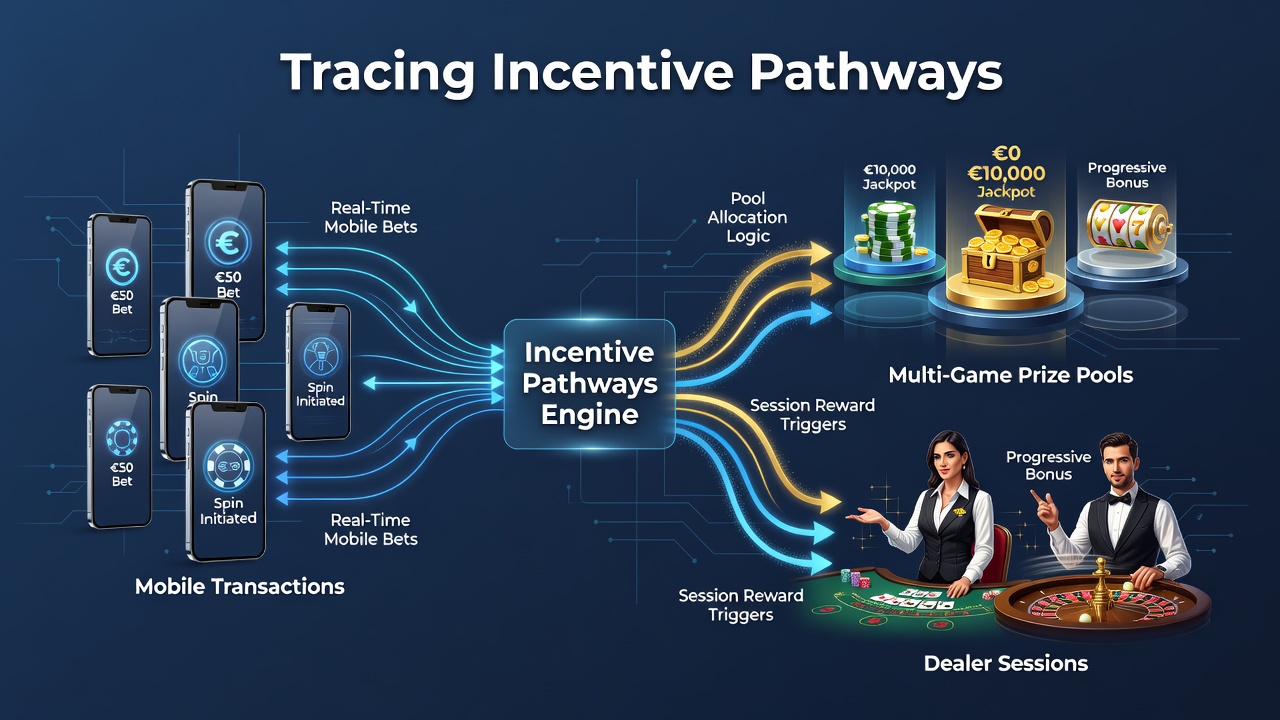
Digital payment systems now route funds through layered incentive structures that link mobile deposits directly to shared jackpot pools spanning slots, table games, and live dealer environments, and observers note these connections have grown more intricate since early 2025. Research from the University of Nevada, Reno shows that transaction data often triggers bonus credits which migrate across game categories without requiring separate funding steps, while the same pathways frequently feed into progressive prize pools that accumulate contributions from multiple titles simultaneously. Data indicates these mechanisms operate through automated allocation rules that assign portions of each mobile deposit to both individual player rewards and collective prize funds, creating traceable flows that continue into live dealer sessions where real-time participation draws from the same pooled resources.
Mobile Deposit Mechanics and Initial Incentive Triggers
Payment processors handle mobile transactions by embedding metadata that activates specific reward protocols the moment funds clear, and this process typically occurs within seconds of authorization. Figures from the Pennsylvania Gaming Control Board reveal that over 68 percent of casino deposits in the first half of 2026 originated from mobile wallets, each carrying flags that determine how much of the amount converts into bonus value versus direct pool contributions. Those who've examined transaction logs find that certain operators apply tiered multipliers where higher deposit volumes unlock access to multi-game prize pools, while lower amounts route primarily into single-session incentives that still carry forward into dealer tables. The allocation logic relies on predefined percentages that split each transaction across reward buckets, allowing the same deposit to influence both immediate free play credits and longer-term jackpot accumulations.
Pathways into Multi-Game Prize Pools
Once initial incentives activate, the funds often move through interconnected prize systems where contributions from slots feed into shared pools that also accept wagers from video poker and roulette variants, and this cross-pollination happens automatically via backend software. Evidence suggests that by September 2026 several major platforms had expanded these pools to include live dealer blackjack and baccarat rounds, meaning a mobile deposit made for a slot session could indirectly support prize growth in table games played hours later. Industry reports from the Australian Gaming Council highlight that pooled contributions now represent approximately 22 percent of total mobile transaction value in regulated markets, with the remainder allocated to personal bonuses that retain eligibility for pool draws. The pathways remain visible in audit trails that record each fraction of a deposit as it migrates, providing regulators with clear documentation of how incentives travel from one game category to another without additional player action.
Integration with Live Dealer Sessions
Live dealer platforms receive the same incentive streams through synchronized account ledgers that update in real time, allowing players to transition from mobile-initiated slots directly into streamed table games while carrying forward any accumulated pool eligibility. Those who've reviewed session data observe that dealer rounds often draw from the same progressive structures seeded by earlier mobile deposits, creating continuous incentive loops where a single transaction can influence outcomes across both automated and human-hosted games. According to a 2026 industry analysis by the European Gaming and Betting Association, roughly 41 percent of live dealer participants in monitored jurisdictions had entered their sessions using bonus credits originally generated from mobile transactions completed earlier the same day. The technical bridges between these environments rely on unified player accounts that maintain prize pool balances regardless of which game interface a user selects, ensuring that contributions and redemptions stay consistent across the ecosystem.
Tracking and Regulatory Oversight Patterns
Regulators track these incentive routes through mandatory reporting that requires operators to log every allocation step from deposit to prize pool entry and onward to dealer participation, and this documentation has become more standardized in recent quarters. Data from the New Jersey Division of Gaming Enforcement shows that compliance reviews in mid-2026 identified several instances where mobile transaction flags failed to propagate correctly into live dealer prize pools, prompting software updates that strengthened the linkage protocols. Observers note that transparent tracing helps distinguish legitimate incentive flows from prohibited practices, while also giving players clearer visibility into how their deposits support broader prize structures. The same oversight frameworks now include periodic audits of pool contribution percentages to confirm that mobile-sourced funds distribute fairly across game types rather than concentrating in one category.
Conclusion
The documented pathways demonstrate that mobile transactions serve as entry points for incentives that routinely extend across multiple game types and into live dealer environments through automated allocation systems. Evidence from regulatory bodies and academic studies confirms these connections operate via predefined rules that split deposits between personal rewards and collective prize pools, with seamless transitions maintained through unified account structures. Continued monitoring and technical refinements ensure the routes remain traceable while supporting the expanding integration of mobile funding with cross-game and live dealer prize mechanisms.